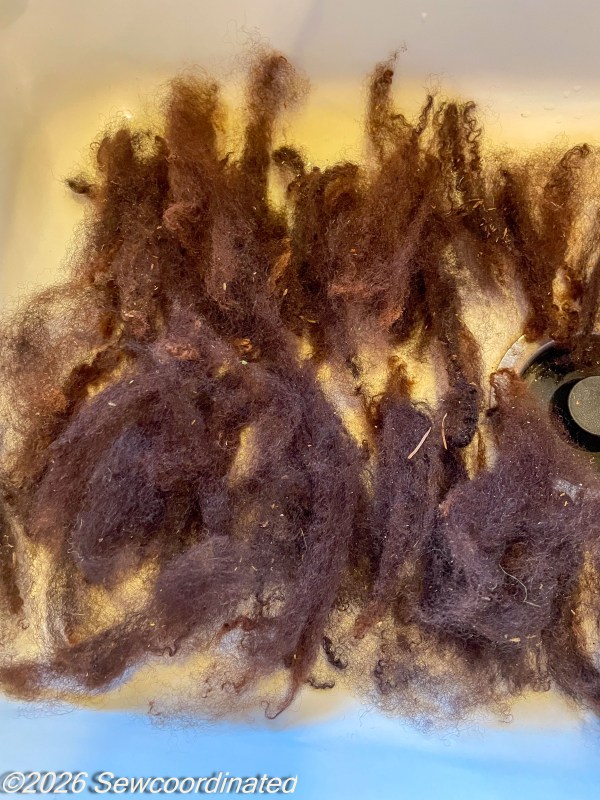
Summer is two thirds over. There are only a few good days left to get important tasks done before the weather prohibits it until next year. It’s often around this time that I begin to think about working with wool.
I have some raw fleece that I bought a few years back, and much of it still needs processing. Or so I thought. When I hauled the box out with the bag of wool inside it, I discovered that moths had begun processing it before me! It was a very shocking unpleasant sight, and I learned that the garbage bag that was used to hold the wool wasn’t mothproof after all. The bag had holes chewed in it towards the bottom. They can do that, did you know? I didn’t, but I knew when I saw it that it was most likely them.
Luckily, even in an infested, chewed up state, wool still has uses. I used some as a mulch on blueberries, and threw a lot of it into the compost. It’s a natural material and it’ll break down into something that improves the soil and helps plants grow.
Salvaging The Remaining Wool
There was a separate brown bag full of black wool that I’d already sorted last year. I’d forgotten about it until I saw it again. It was stored in the same box as the moth eaten wool but it didn’t seem to be affected by the moths as badly as the rest of the wool, which was white and gray fleece. I’m really glad about that because the black wool is my favorite of the 3 fleeces I bought: the locks are very long, and it’s a bit less greasy, making it easier to clean.
A Very Condensed Summary of My Raw Wool Journey
Out of the 3, the gray was the greasiest and hardest to wash, and the white was between the 2. I used the suint fermentation method to clean the white wool, but I left it in a bit too long, and it got overprocessed, meaning that the bacteria that eats the grease and sweat started eating the wool as well. That was something experimental that I did a couple years back and never blogged about. I learned a lot about wool through all this – I now know more about sorting the fleece, what to use and what to discard. I also went through a lot of trial and error in learning to wash wool, and I developed my own best way to wash, also known as “scour” the wool for my own purposes.
How I Wash Wool
The first thing I need to say is this: It takes a lot of patience to wash wool. It has to be handled very gently at all phases of the wash process, because If it’s agitated too much during any part of the washing, it will begin to felt. For that reason I try not to move it much at all, which isn’t easy because adding some movement helps to release the oil, sweat, poo and dirt into the water. Temperature changes are also a concern. Extreme changes from hot to cold will also make the wool felt. Gentle is the best word to associate with wool washing.
That being said, the following is a pictorial walkthrough of the last of my un-motheaten wool fleece being washed:
I lay the wool locks into the sink:
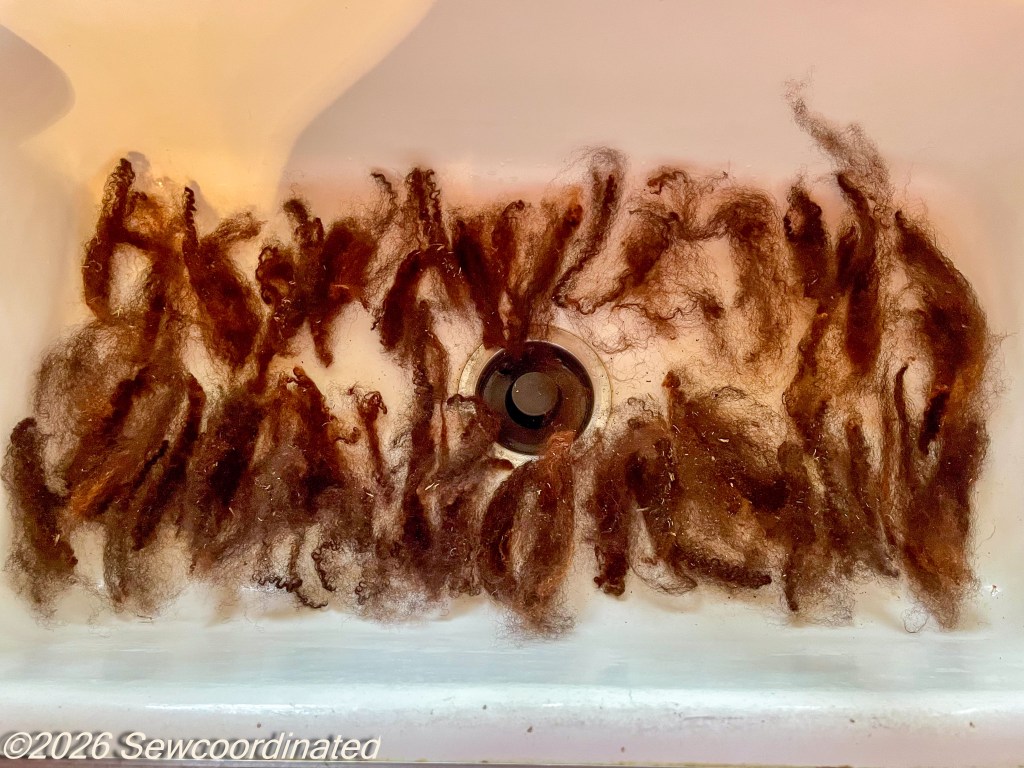
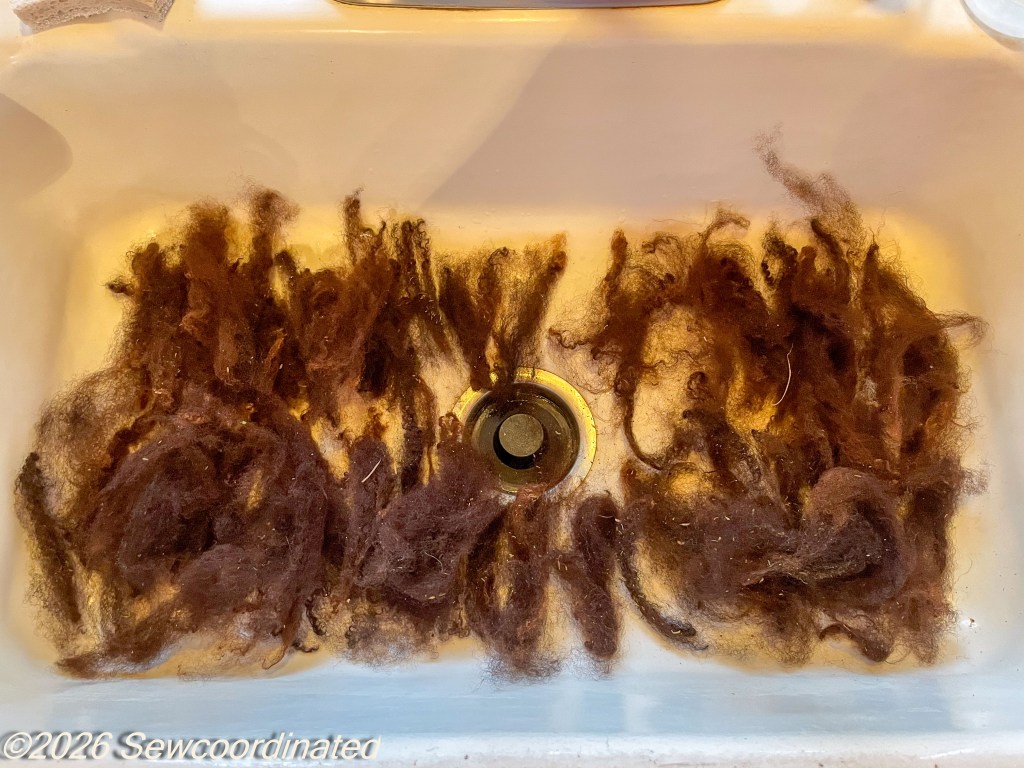
I always begin by using the hottest water possible, and I aim the water in the center so that it doesn’t hit the wool with it’s pressure. That would cause agitation, which will cause felting:
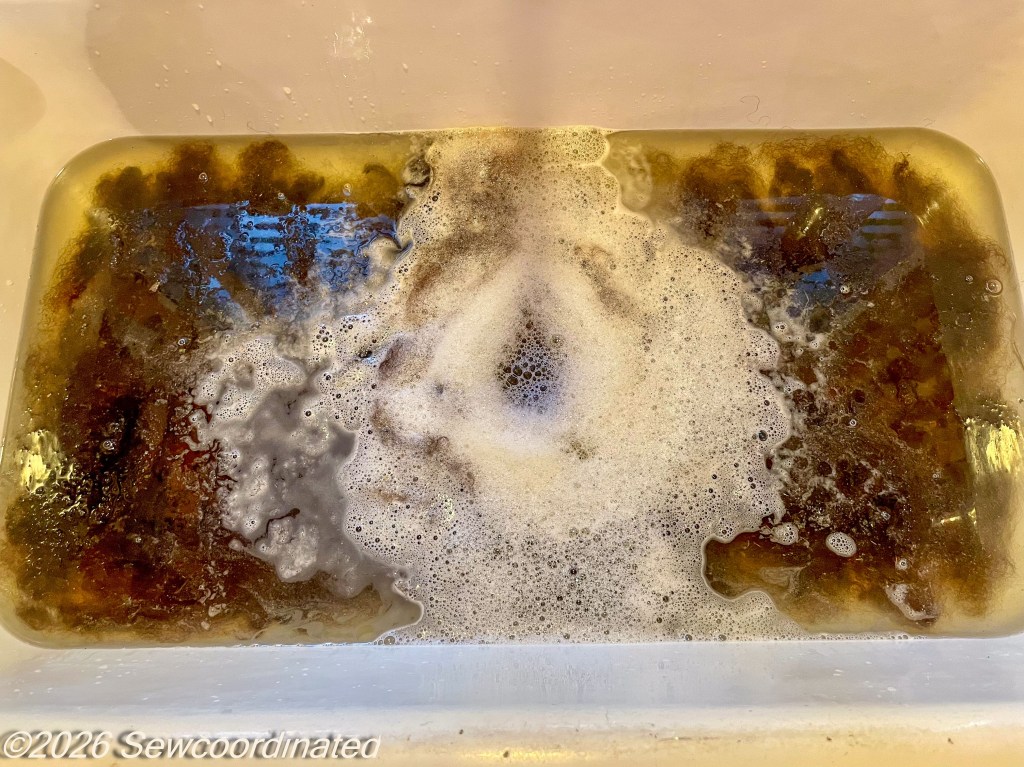
I usually use a basic dish soap, such as Palmolive. I also sometimes use laundry detergent. I’ve tried Power Scour in the past, and it works well, but right now I have a bottle of Seventh Generation ultra concentrated laundry liquid that I bought on Amazon. The bottle that I have is 23 oz, and is supposed to clean 66 loads. That’s a little under 3 cups of liquid to do that many loads. It might be great for cleaning wool.
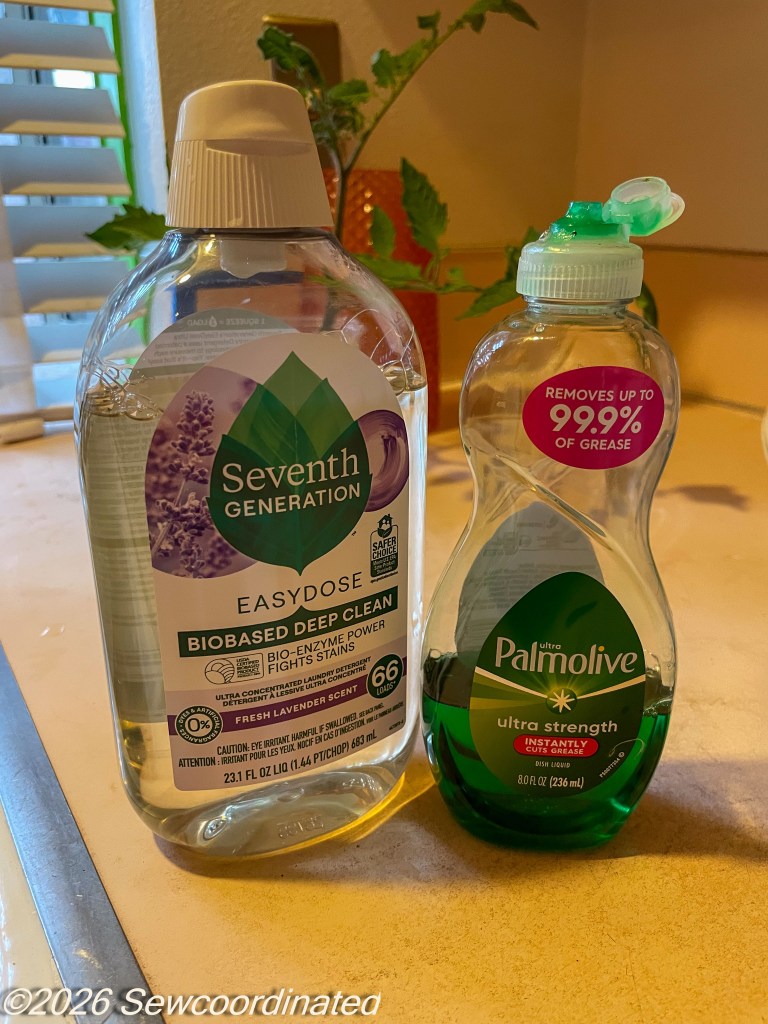
Usually with wool, I do 2 soap washes. The first uses a lot of soap and the 2nd uses a lot less, just a small amount. I should add that this depends on how much wool you’re washing. If I wash in smaller batches, then I don’t always need a 2nd soap cycle. This is actually preferable, in my opinion, because it’s easier and faster. The down side is that many small loads have to be washed. It’s up to you to decide what to prioritize. This load is a smaller one, and I know this because the water isn’t as dirty as my last, larger load. I don’t weigh every load because it’s oily and just needs to be washed. I just eyeball how much wool I add to the sink, so it varies every time.
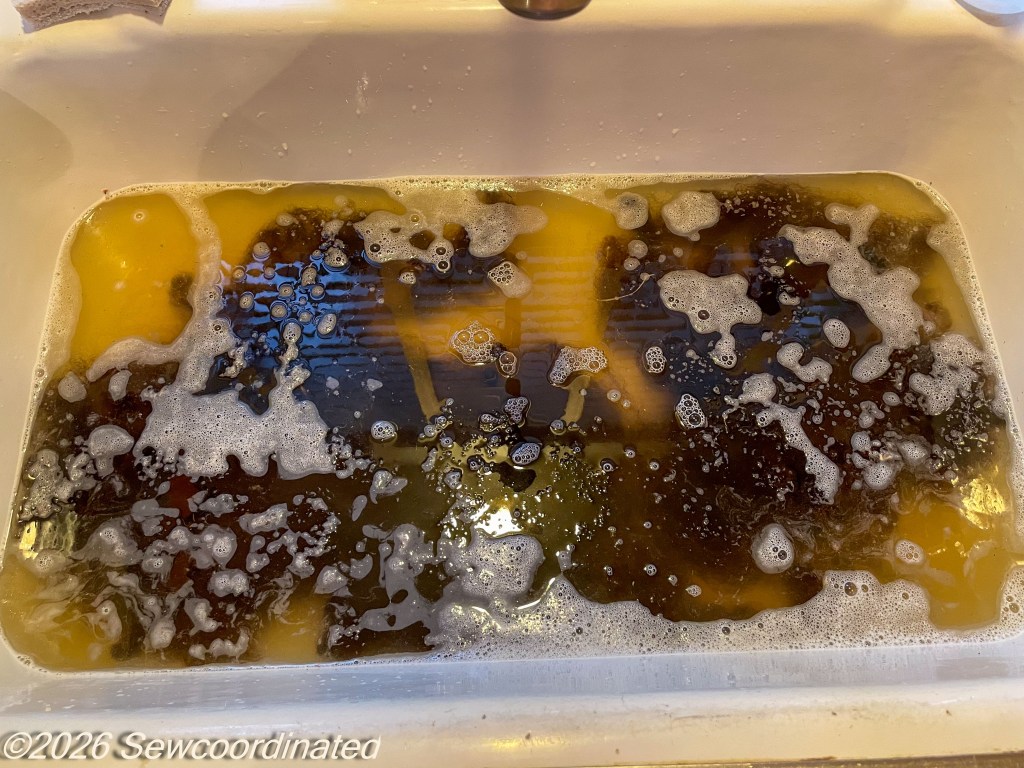
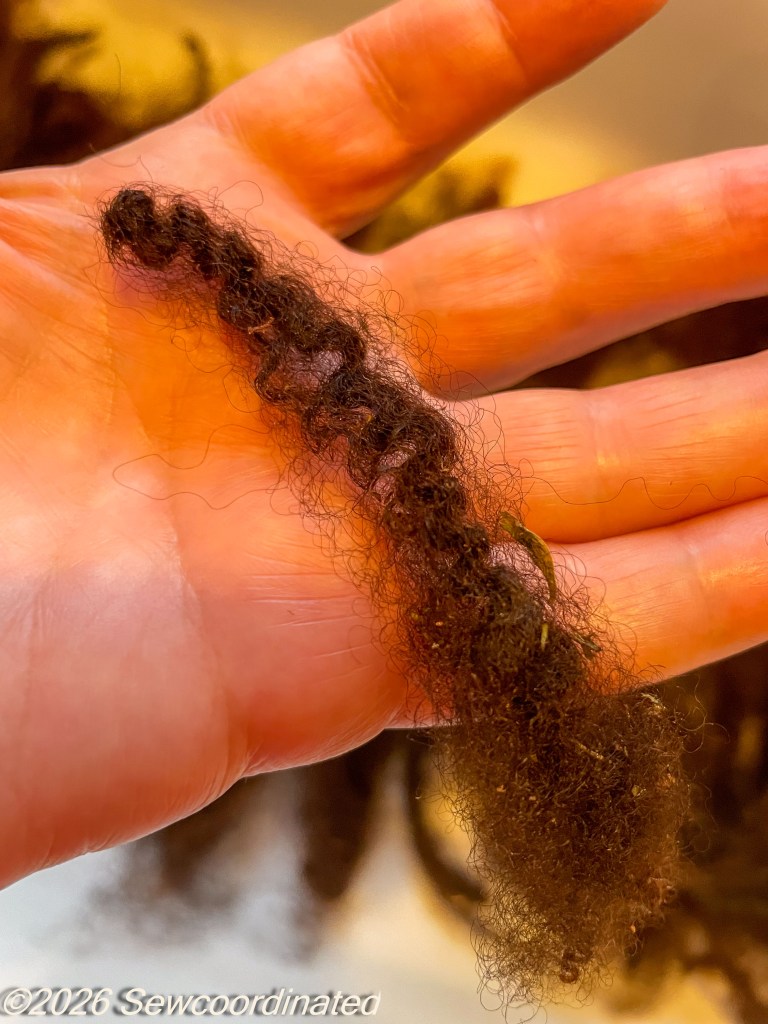
And for the rinse, I most always do 2: the first to remove the soap and remaining dirt, and the 2nd as an extra cleanse to make sure the water runs clear. In this 2nd rinse I also add a conditioner, such as Beyond Soft, which is what I currently have. Really I think any liquid fabric softener will do. I don’t use too much, just a few drops.
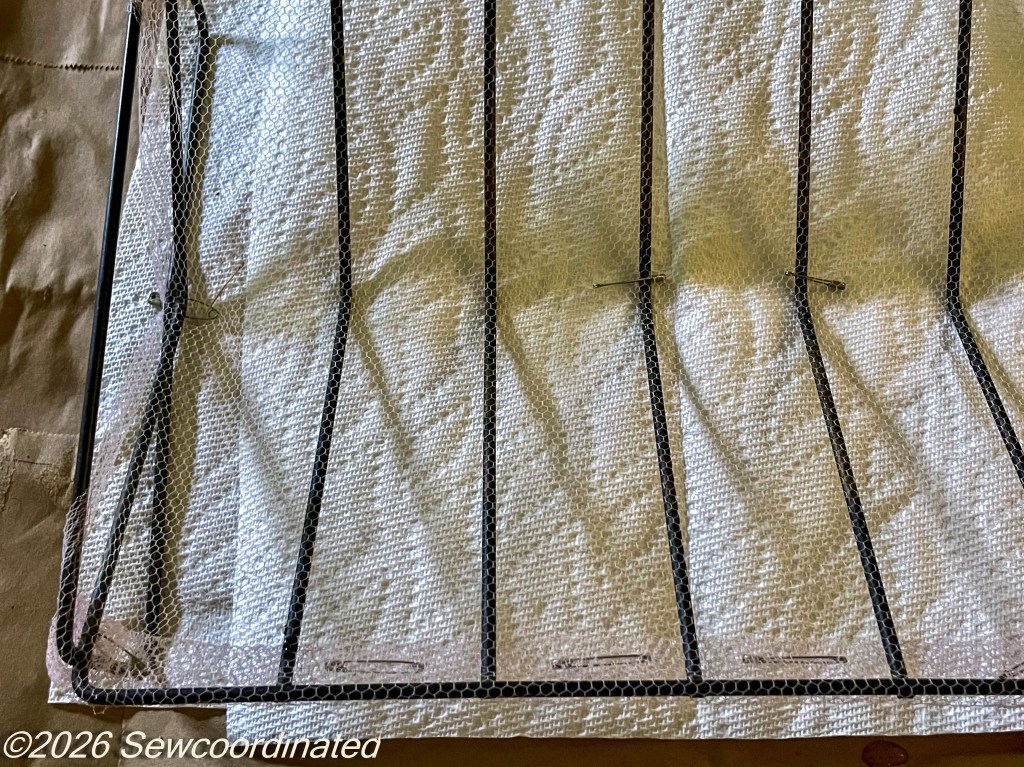
After the final rinse, the wool is ready to be dried. I gently squeeze what water I can out of it, and lay it to dry on a drying rack. This rack began it’s life as a trivet inside a roasting pan, and now it’s what I use to dry wool. I repurposed it for drying wool by lining it with tulle so that the wool doesn’t fall through:
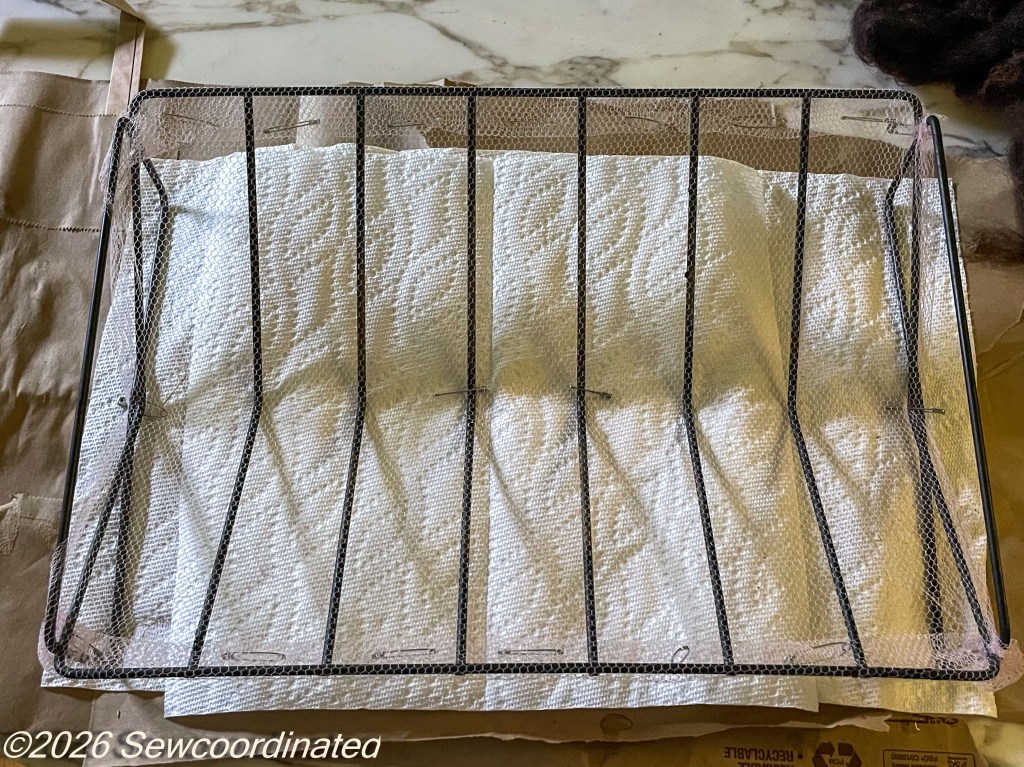
With the wet wool:
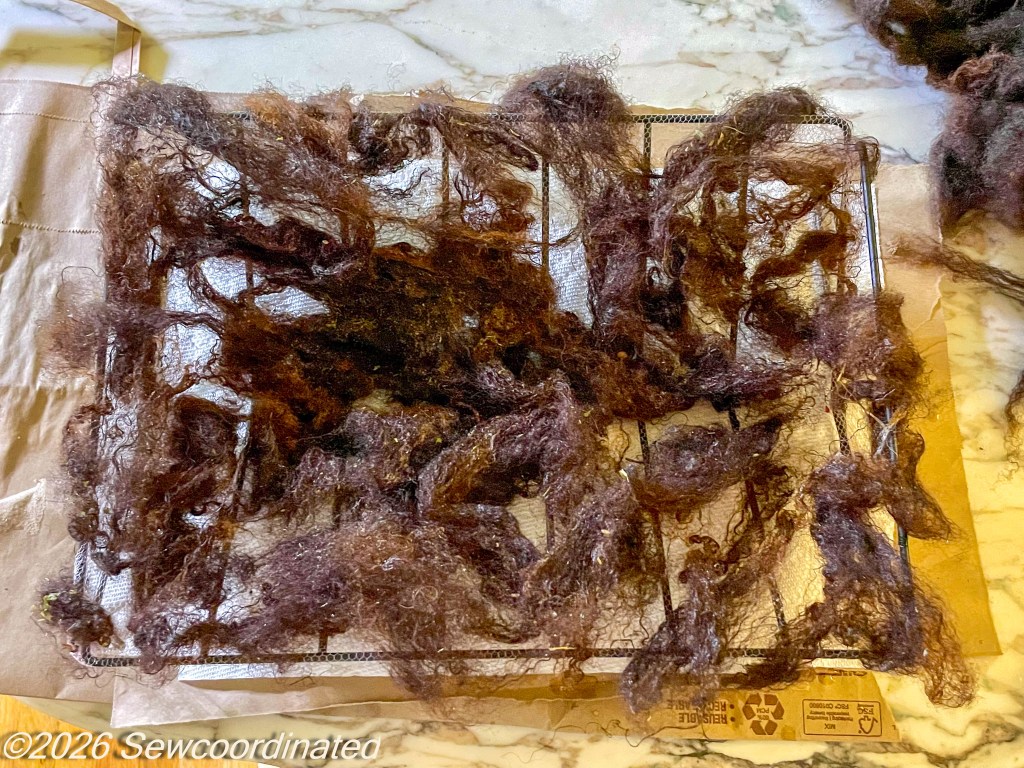
I don’t handle the wool much at all while it’s drying. Like human hair, it’s prone to breakage/damage while it’s wet. I wait until it’s dry to sort it.
What’s Next
And that’s it, that’s how I wash wool. I have a few more loads to do, and after that it’s time to sort. This now clean wool needs to be sorted and combed. I’ll be making a separate forthcoming post about that, so you can see the journey that wool takes in it’s entirety.
Thanks for reading 🙂
 Sewcoordinated