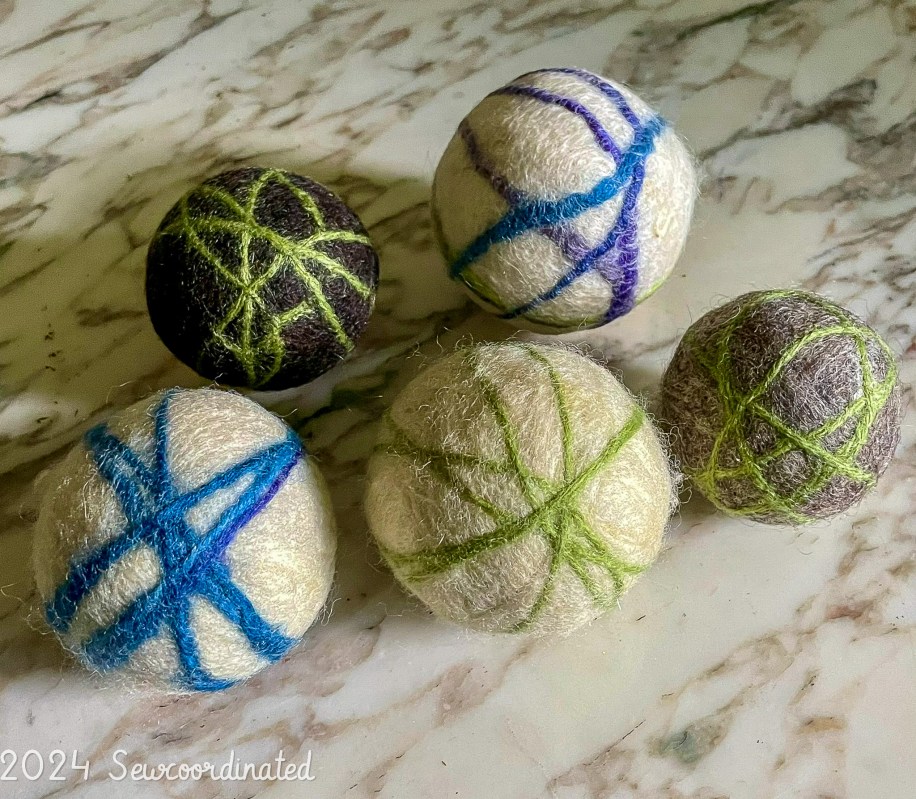
The sustainability of wool is truly amazing. The cast aside wool that isn’t good enough for spinning can be used in different ways, and this post is focusing on a favorite: wool dryer balls.
If you aren’t familiar with these, they’re a natural alternative to dryer sheets. They’re said to reduce the time it takes clothes to dry, therefore running the dryer for less time and saving energy. They’re also supposed to reduce static electricity in the same way that softener sheets do, sans the cost and chemicals. I’ve found that they do reduce static, but keep in mind that the ones I’ve been using up until now were made a few years back from wool yarn. I made them smaller than the standard size and they’ve been in use for a long time, which is why I’m replacing them. Now that I’ve made some out of actual wool roving and in a larger size, I can really test how well they work.
Two years ago I bought some wool fleeces to finally have the experience of processing wool. And I’m still working on them! They were big fleeces, and I really knew very little about it at the time. I had to learn to sort and wash the wool before I could do anything with it. What I’d wanted was to have a large amount of wool for spinning at a lower cost than buying it fully processed. What I learned was that a large amount of a fleece isn’t top notch, and there’s a lot left over.
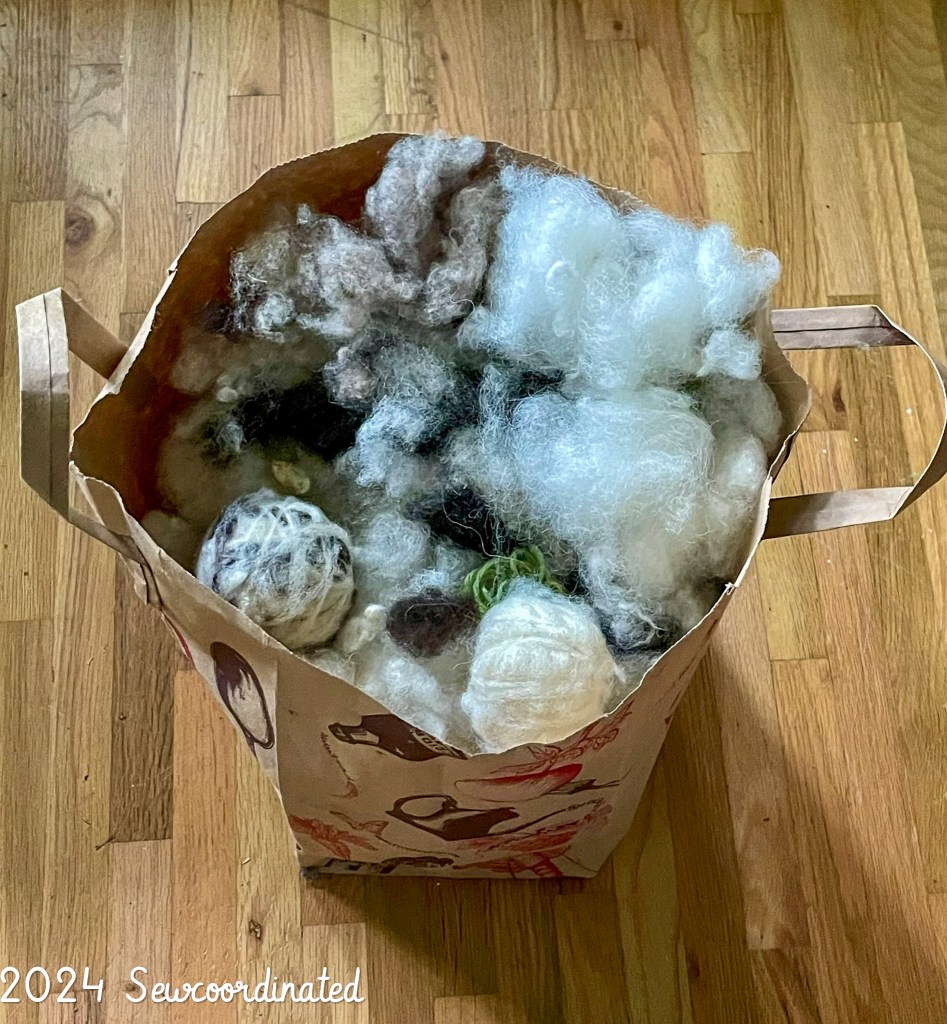
The wool used for making the dryer balls is the wool that’s cast off from my combs during the process of making roving that’s good enough to spin.
Here’s a pic of my “dryer balls wool” bag, with 2 unfinished ones that still need more work:
It’s fun to make these in my spare time, I find working with wool to be relaxing 🙂
Making them isn’t too difficult, just a bit time consuming because they have to be felted, which involves putting them through a hot water cycle in the washer.
I just wrap the wool around and around into a ball, until it’s large enough. I make it larger than I want the finished one to look, because the wool shrinks down during the felting process., I can’t provide more details about this part of the process, because it’s a bit unpredictable and I’m still learning. When the ball is the size I want it, I place it into a nylon stocking and throw it into the washer with the white wash. And that’s it!
Here’s some finished ones I made recently:
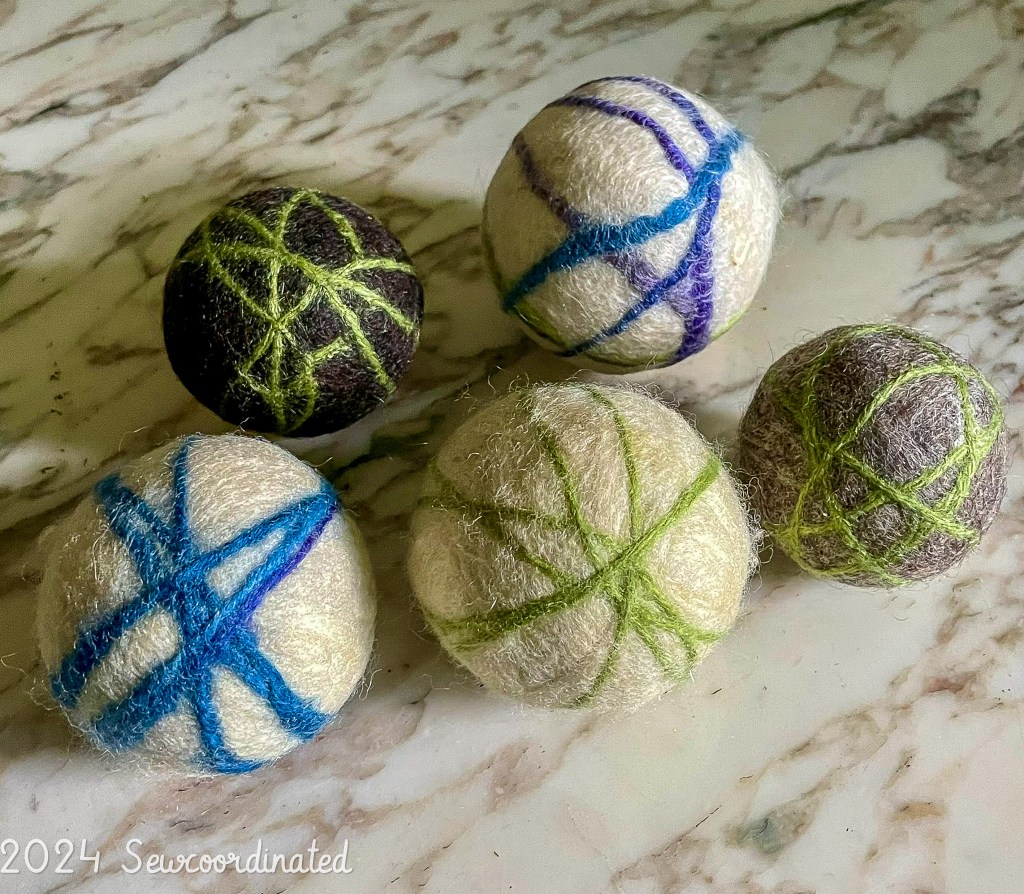
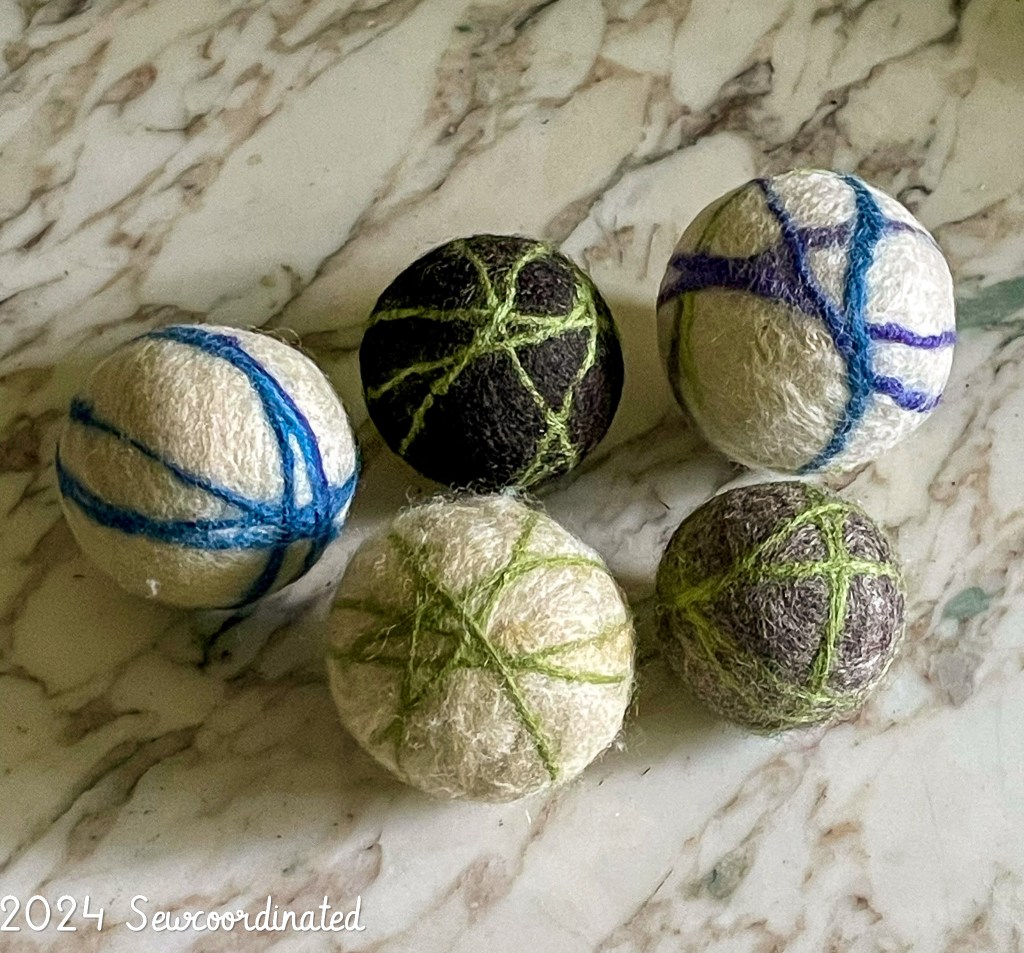
I like to add some color trim with scrap wool yarn. It makes them prettier and easier to see. I think that going forward I’ll be making them in the larger size. They’ll have a longer service life that way and will probably work better at reducing drying time and static.
The cool thing about these is that when they’ve lost their effectiveness, they can be recycled into the garden, as either a mulch and fertilizer for plants, or tossed straight into the compost. That’s the beauty of wool; nothing is ever wasted.
Do you use these in your laundry? If so, do you find them helpful?
Thanks for reading 🙂
 Sewcoordinated