I had quite a bit of Suri Alpaca left over from last year’s visit to the farm. I hadn’t washed it because winter arrived, and tasks like washing fleece just don’t seem like the thing to do during the cold weather. It’s best to dry the fleece in the sunlight of the spring and summer, because it requires little turning and does all the work for me!
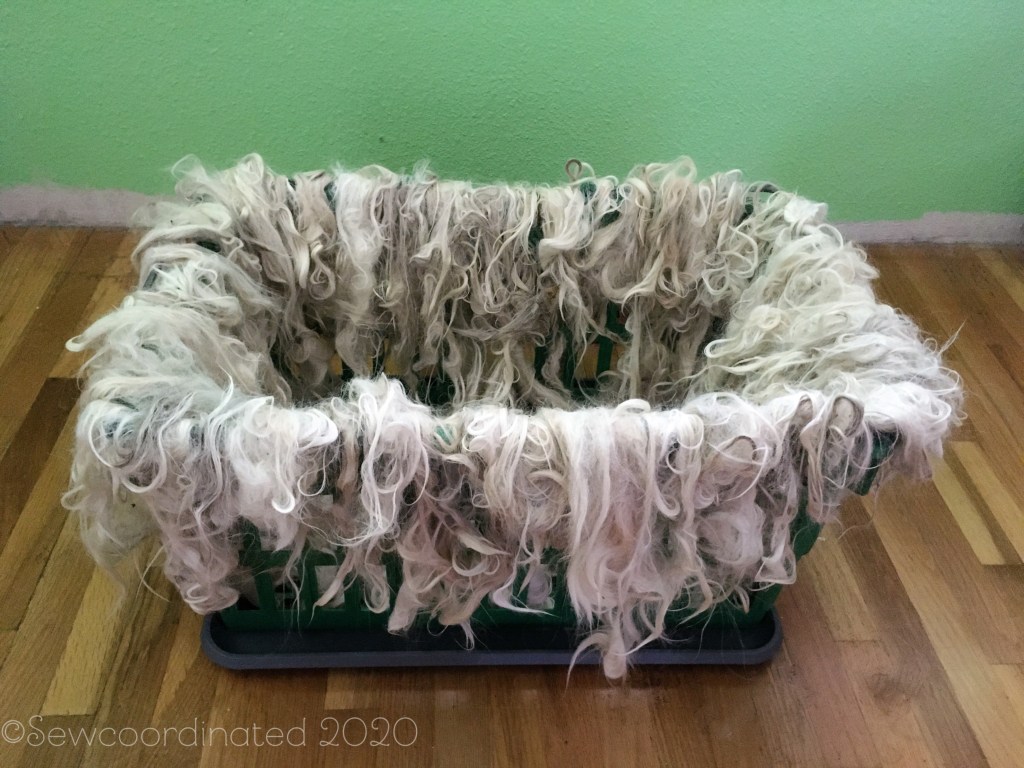
When the weather began to warm up, I decided to process the fleece. It had the usual dirt that took several washes to remove. I set it to dry in a grocery basket for ventilation:
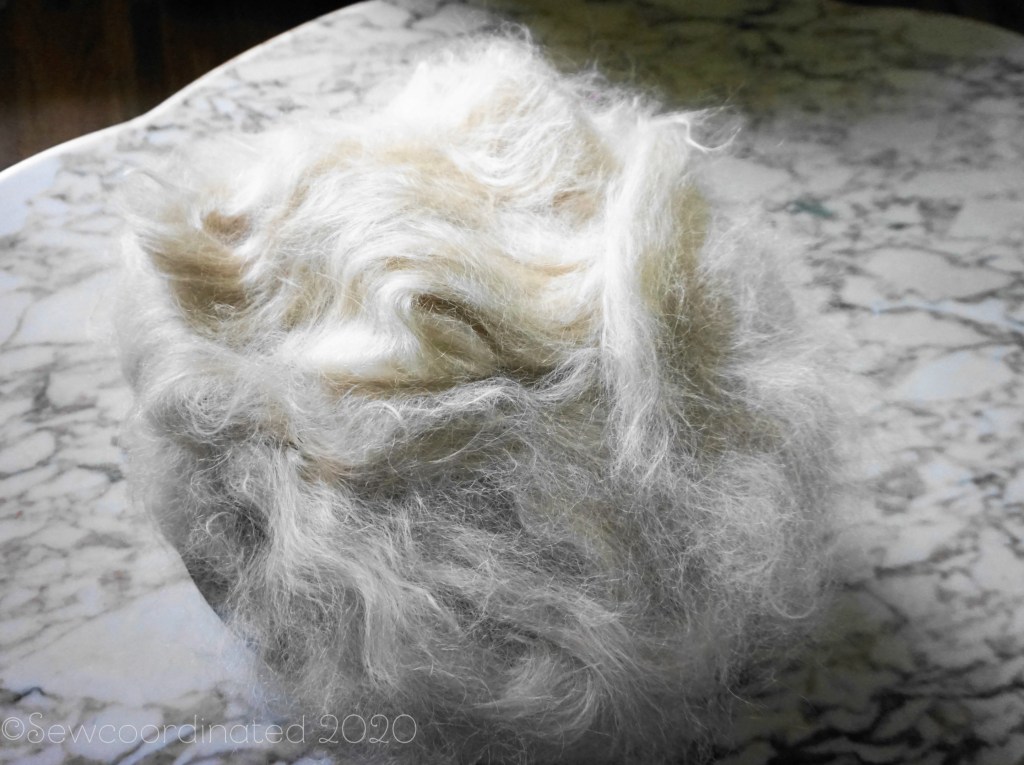
After it dried it was time to comb it, to remove any remaining bits of vegetable matter (vm). This took several days to accomplish, and here’s how it looked afterward:
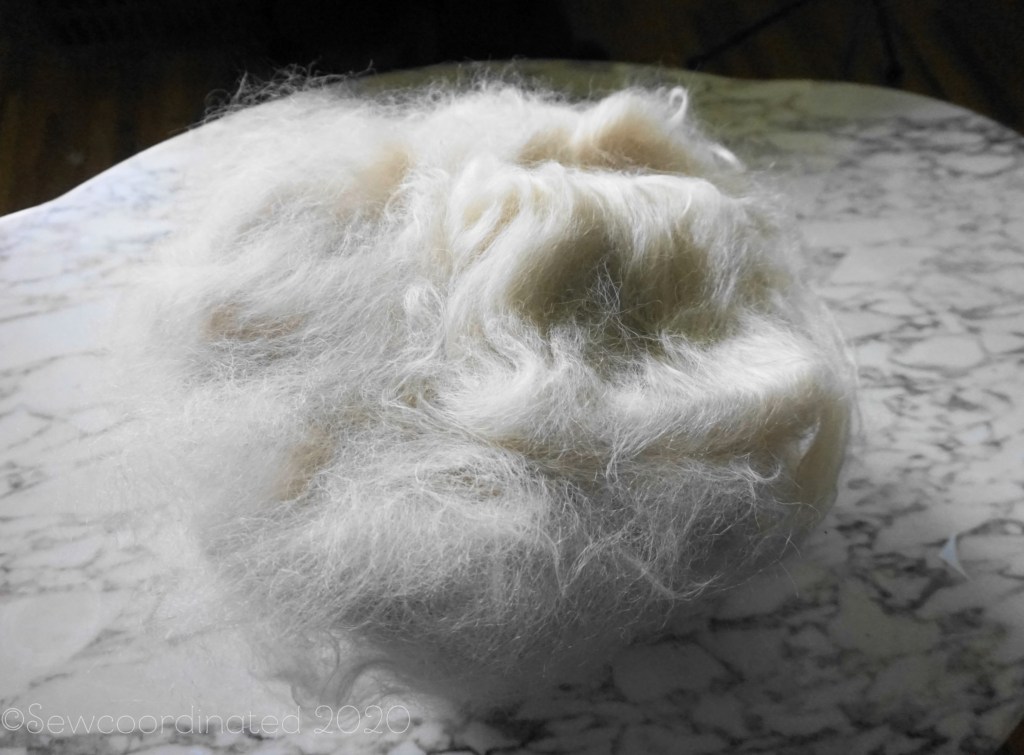
It was then time to card it up. I decided to blend it with the wool that my daughter bought for me a couple years back from the state fair. That wool is actually from Lincoln breed sheep, I found this out by going to the farm’s site and seeing that they raise only that kind of sheep. Lincoln is a long wool, and is from a breed of sheep that originated in England. The bag of wool she bought was already washed (Yay!), so it only needed to be combed. Here’s a pic of it:
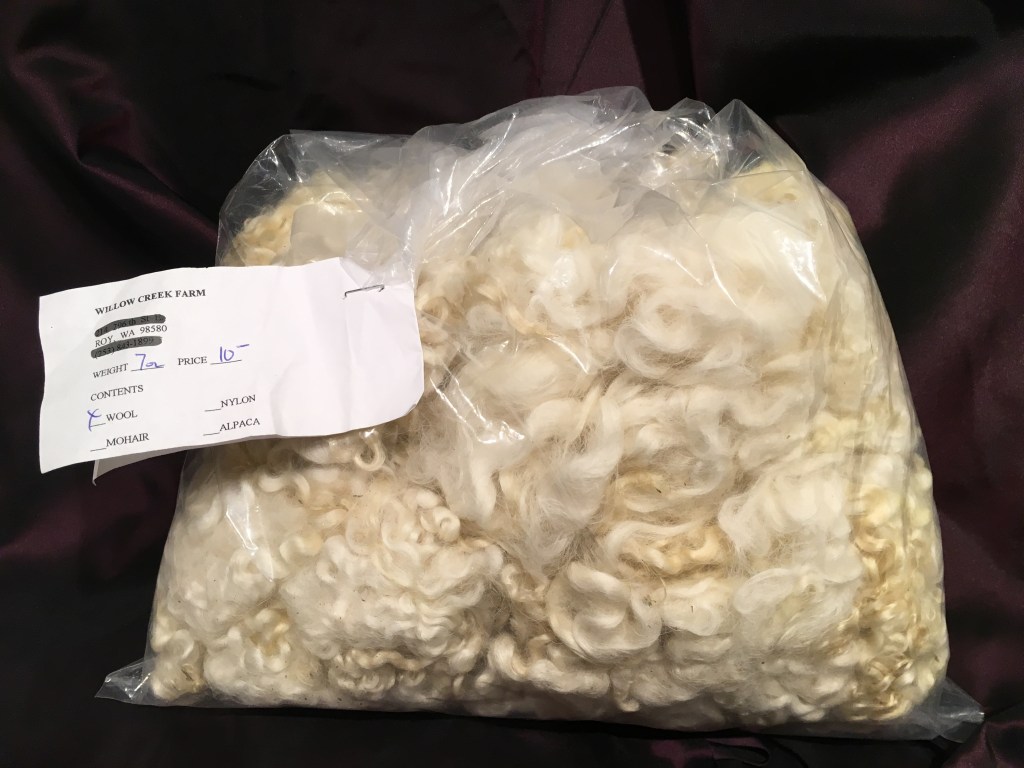
After combing, exactly half of the 7 oz. was usable. The rest was short cuts and nubs, good for felting probably.
At the time that I was processing this, I had a specific project in mind: the Forest Hooded Cardigan, by Ruke. On one very cold day this spring, I’d decided that I needed a second jacket, something other than my sweat jacket, to throw on when I have to step out onto the deck. I thought that I’d spin up the yarn for the project, which is quite a bit, almost 2 lbs. (it’s an oversized design). Now I’m not sure I want to do that, I might just buy a basic workhorse yarn blend of acrylic/wool, and use that to see if I like the look and fit. But that was the original goal of this blend, and I did nearly achieve the amount needed, 28 oz. (794 gms). My final blend weighs 27.26 oz.
I also used a different approach as far as color is concerned. Usually I dye the fiber before I card it, but this time I decided not to because I had so much. I thought maybe I’d spin it first and try my hand at yarn dyeing, but now I might dye the rolags and then spin it up.
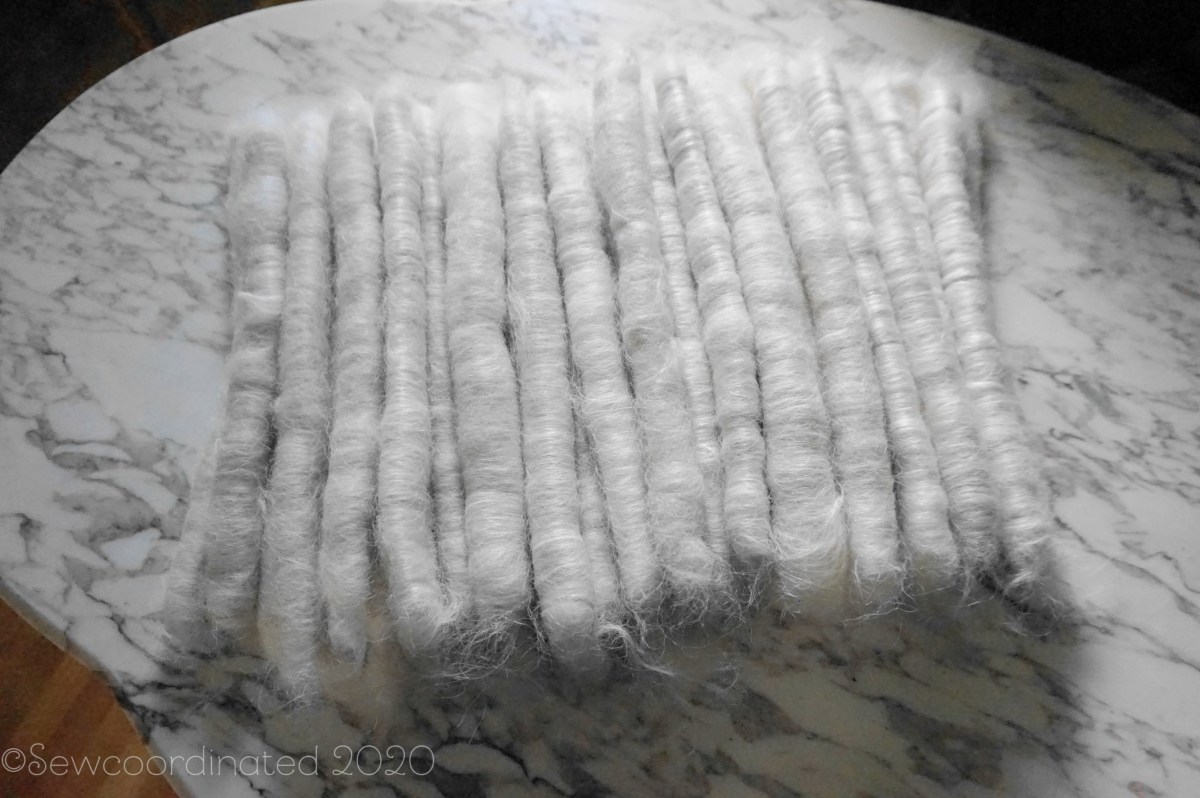
It’s such luxury fiber that I want to make the right decisions on how to handle it, so I’m taking my time and giving it thought until the answers arrive. Here’s some pics of the finished rolags:
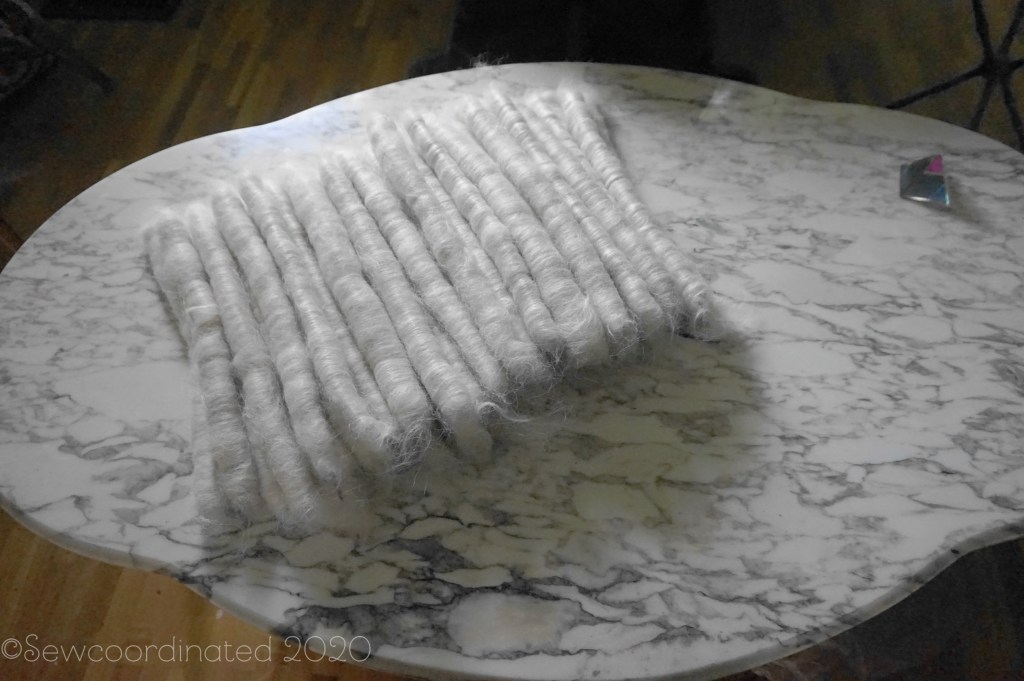
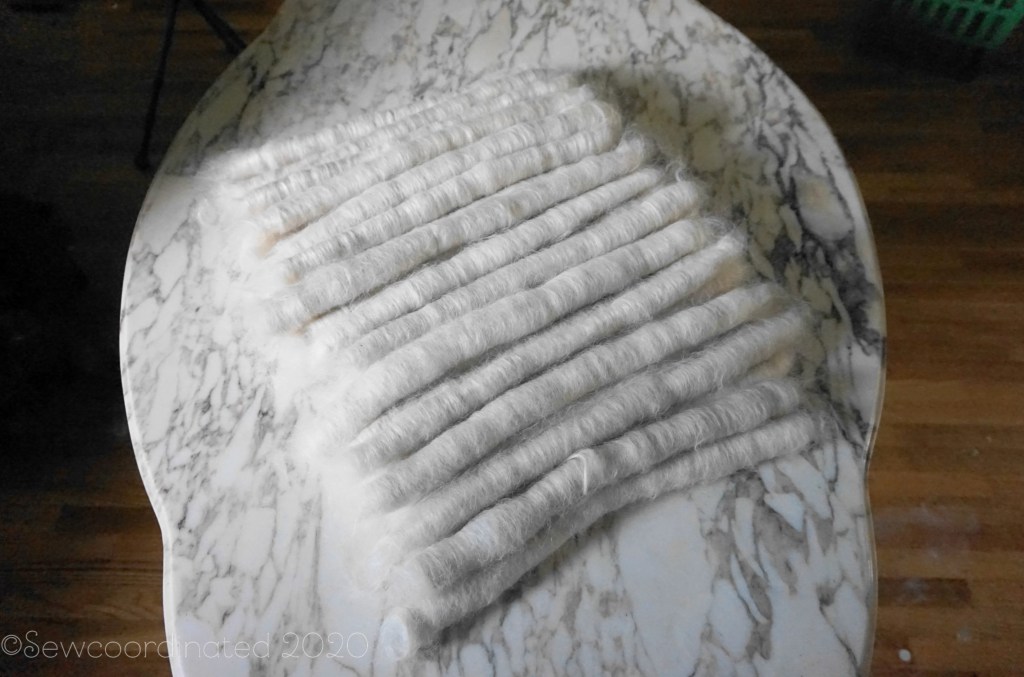
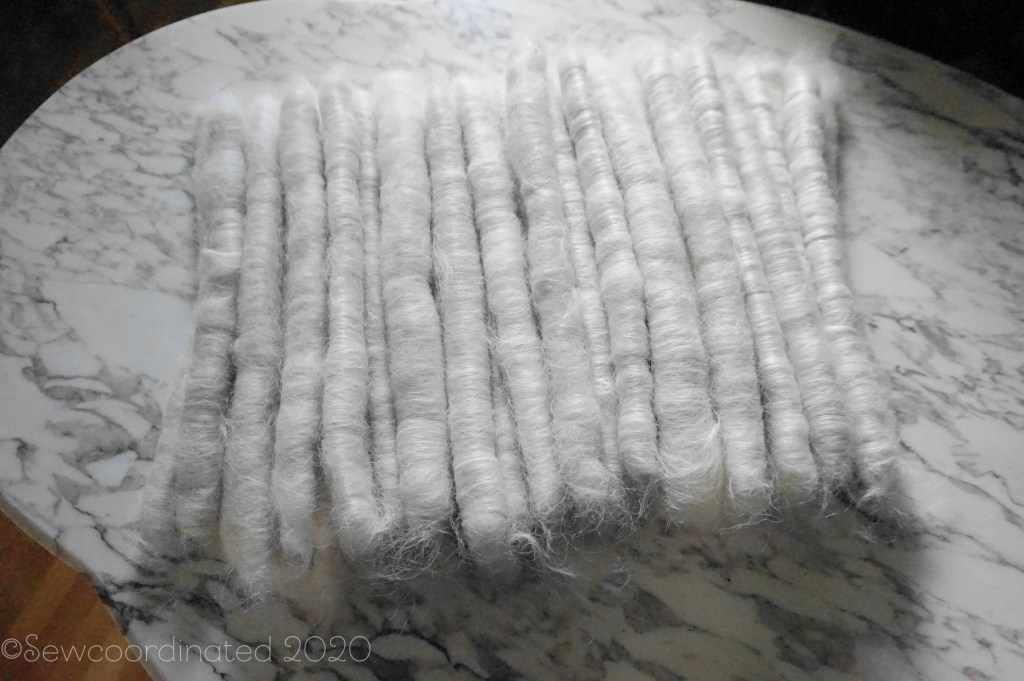
This is definitely the most I’ve ever processed at once, and I just think that the way it looks in it’s natural state is quite beautiful. I might just start spinning it!
Take care and thanks for reading 🙂
 Sewcoordinated
I’m fairly new to all this and have just started spinning pure alpaca – I was gifted raw fibre so it’s the first I’ve prepped for spinning. Labour intensive isn’t it? Must save up for a drum carder!
LikeLiked by 1 person